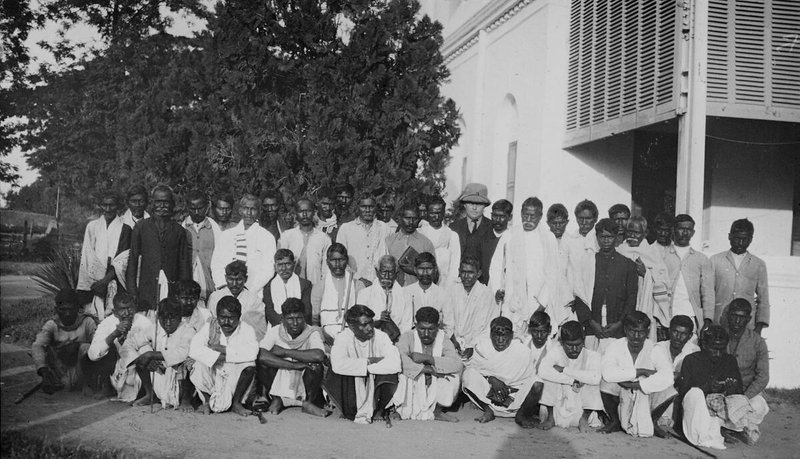
The Santal Colony is situated in the western part of Assam strong in pleasure and is part of Kokrajhar district of the Bodoland Territorial Region (Assam).
The Santal Colony Tribal Block is situated in the western part of Assam and is part of Kokrajhar district of the Bodoland Territorial Area District (Assam). The Santal colony was created way back in the year 1881 with Thakurpur under the then Dingdinga Gaon Panchayat as it’s headquarter. The term Thakurpur means ‘Village of God’. The Santal Colony Tribal Block has been upgraded to a full-fledged Colony by the Assam government on 24th August 1977 with 57,930 bighas of land and has been renamed as Santal Colony Tribal Block. Today, the Santal Colony Tribal Block is comprised of 45 Revenue villages with it’s headquarter at Grahampur. The Santal Colony Tribal Block is populated by various communities such as Santals, Oraons, Mundas, Rabhas, Telis, Bengalis etc and majority of the Santals are the followers of Christianity in the colony.
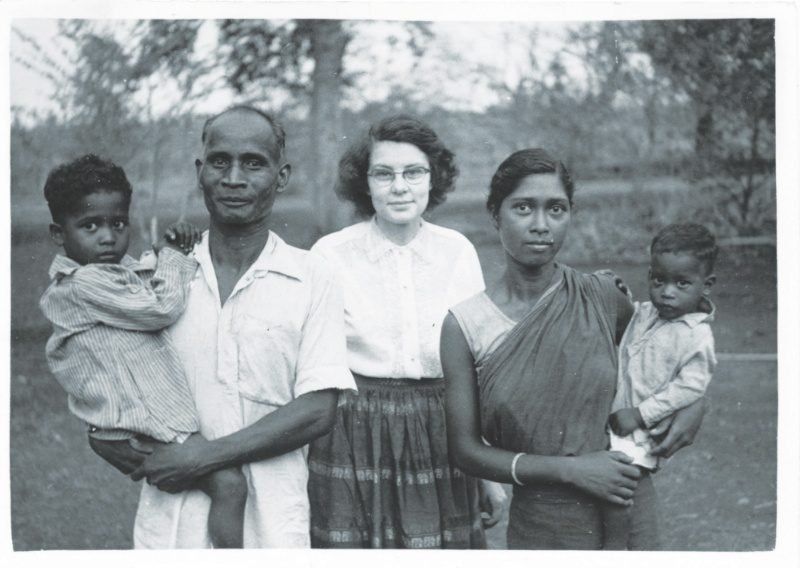
The Santals are considered to be the largest homogenous scheduled tribe in India (Troisi, 1978) although others place them as the second largest tribe of India (Kochar, 1979) after the Gonds and Bhils. The Gonds and Bhils are larger, they are however very heterogeneous and are considered to be the constituents of a group of tribes designated by a common name (Hembrom, 1996). The Santals have been in India since time immemorial. Ethnically the Santals, Mundas and Kharias belong to the same family of the Kolarian race (Roy, 1970). Linguistically the Santals are classed with the Munda family of language, a language of Austric group to whom Max Muller gave the name of Munda family of languages (Hembrom, 1996). The Santal Colony of Assam came into existence after 1880s only when the two missionaries namely Lars Olsen Skrefsrud and Hans Peter Boersen from Norway and Denmark respectively, who were working among the Santals in the Santal Parganas of Bihar decided to bring the Santals to western part of Assam in the year 1881. During the 1870s, the Santal Parganas of Bihar was over populated compared to lands available for cultivation. One of the aged person of the area opined that the soil of the Santal Pargana was not suitable for agricultural purposes. So, the Santals were interested to move out of the Santal Parganas and settle down in other parts of the country where the soil was suitable for agricultural purposes. Hence, the Santals requested Skrefsrud, who was working among them during that time to look for such a place where they could migrate to in large numbers. At first instance, a proposal was made to take the Santals to the Northern part of South Australia. Mr. Francis Dutton, Agent General of the South Australian government in Great Britain was contacted. The proposal was almost accepted through the South Australian parliament and W.H. Bunday, Minister of Justice and Education sent formal invitation to Skrefsrud. Finally the plan had to be cancelled at the intervention of the Vice-Roy of India and as a result, an arrangement had to be made within India. Skrefsrud did not give up the idea of a Santal colonization outside the district of Santal Parganas.
Through Dr. Graham, Skrefsrud contacted the officials in Assam in 1880 and on behalf of the Santals, Skrefsrud made an agreement with the Assam Government for the settlement. Ultimately an area covering 30 square miles of land was secured near the place called Dingdinga, 30 miles north of Dhubri in the Kokrajhar district of the BTC, Assam. By the end of 1880, all arrangements were made for bringing the Santals from the Santal pargnas of Bihar (Olav, 1967). The migration of Santals into other parts of Assam had already started much before the arrival of Santals in the colony. But the situation in Kokrajhar district of the BTC is totally different than the other parts of the state of Assam as the migration of the Santals into this area started from 1881 onwards only. A missionary Mr. Boersen arrived with the first batch of 42 families on 8th Febuary, 1881. They came by train and steamer and first landed at Dhubri. Thereafter, they marched on foot about 30 miles north of Dhubri and gathered under a huge tree near a market place called Dingdinga. After their arrival, another batch of 13 families arrived under the leadership of Hezekiah Das, a teacher at the Ebenizer Boys School, Dumka.
The families who landed at Dingdinga soon started cleaning the jungles of the area allotted to them and built some new huts in the area meant for them. So, the 55 families spread over five villages and a church was built at a place called Thakurpur, (located presently close to Dingdinga market) meaning the village of God. It was the first church of the Santal mission in Assam. And the village Thakurpur remained the headquarters of the colony for some years. Later on, the headquarter of the colony has been shifted to Grahampur in 1892. The Santals of the colony celebrated the centenary jubilee commemorating the completion of one hundred years of existence of the colony in the year 1981. The families, who had come, were engaged in the mini tea garden called Mornai Tea Estate located very close to the villages where the Santals settled. After working in the tea garden for sometimes, when the economic condition of the families improved a little bit, they moved to the surrounding areas and cleared the jungles for settlement. And that is how the Santal villages are found today in the colony.